In the arms race for artificial intelligence dominance, the weapons aren’t algorithms — they’re chips. And on June 8, 2026, one of the largest weapons deals in tech history was announced: the SpaceX xAI GPU deal. Google agreed to pay SpaceX approximately $920 million per month for access to roughly 110,000 Nvidia GPUs, housed inside xAI data centers, over a 32-month term. Total contract value? Somewhere in the neighborhood of $29 billion.
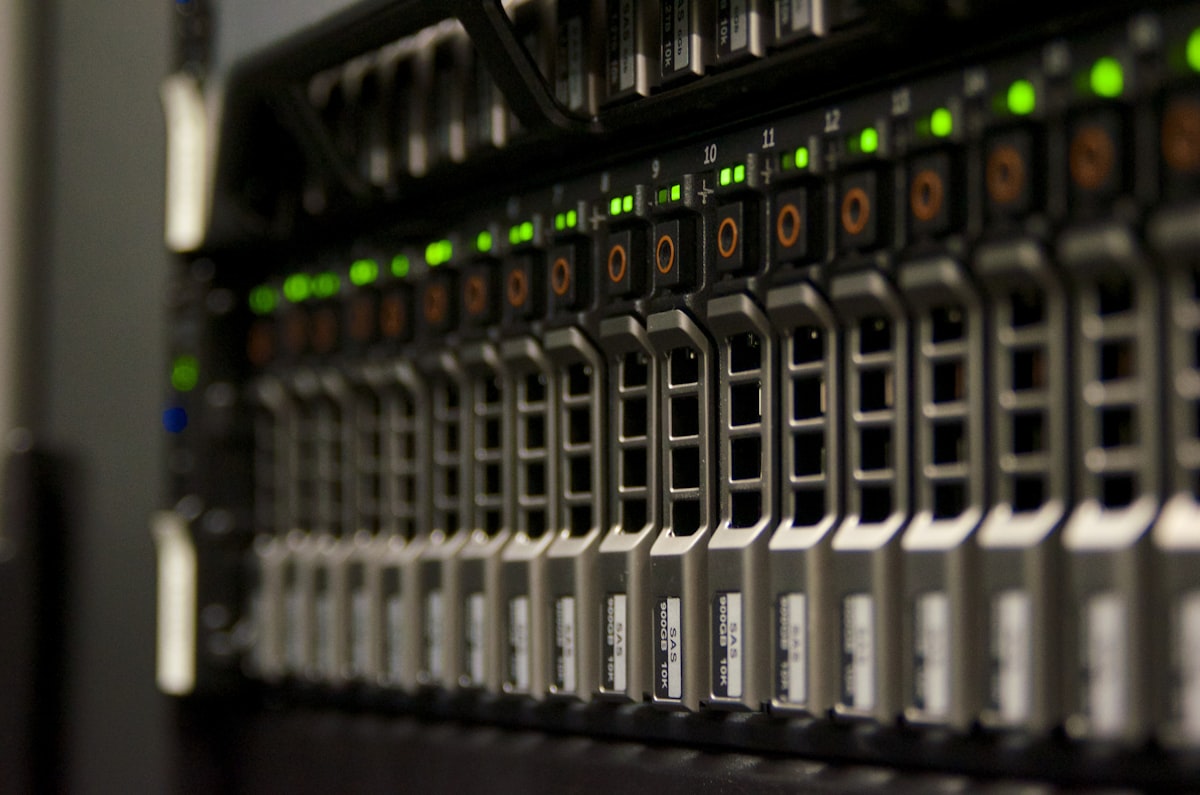
Let that sink in. Twenty-nine billion dollars. For a compute lease. This isn’t a merger. It isn’t an acquisition. It’s infrastructure-as-a-service at a scale the industry has never seen before. And it signals something deeper: even the companies that literally design their own chips can’t build fast enough to keep up with AI’s appetite for compute.
Here’s what the SpaceX xAI GPU deal actually means, why both sides signed on the dotted line, and how it reshapes the battlefield between Google, Microsoft, Amazon, OpenAI, and xAI.
Why Google Signed the SpaceX xAI GPU Deal
Google designs its own AI accelerators. TPUs — Tensor Processing Units — have been the backbone of Google’s AI training infrastructure since 2016. So why is Google suddenly writing a ten-figure monthly check to Elon Musk’s ecosystem for Nvidia GPUs?
The short answer: TPUs aren’t interchangeable with the broader AI ecosystem, and Google’s needs have outgrown its own manufacturing timeline.
The TPU Gap
TPUs excel at training large language models within Google’s walled garden. But the AI landscape in 2026 increasingly demands heterogeneous compute: fine-tuning open-weight models, running inference workloads that customers expect to port across platforms, and supporting frameworks that optimize first for CUDA, not XLA. Nvidia’s CUDA ecosystem remains the de facto standard for AI research and commercial deployment. TPUs are powerful, but they’re not universal.
More critically, Google’s roadmap for next-generation Gemini models — particularly the rumored Gemini 3 Ultra training runs — reportedly requires mixed TPU-GPU clusters to hit target timelines. TPUs handle the dense training; GPUs handle the ecosystem compatibility, experimental architectures, and overflow capacity. For a deeper look at how memory costs now dominate AI chip spending, see our coverage of why HBM is reshaping semiconductor economics.
Competitive Pressure
Microsoft’s partnership with OpenAI has given it a narrative — and a reality — of being the default AI infrastructure layer. Azure’s GPU allocations, through its OpenAI collaboration, have positioned Microsoft as the place serious AI builders go. Amazon, through Anthropic investments and its own Trainium/Inferentia chips, isn’t standing still either.
Google couldn’t afford to wait. If Gemini’s next iteration falls behind GPT-5 or Claude’s successor because of compute constraints, the downstream effects on Google Cloud’s AI offerings, Search integration, and enterprise contracts could dwarf the $29 billion price tag of this deal. For context on how compute economics are reshaping AI business models, see our analysis of Anthropic’s $1.25 billion monthly compute deal.
Capacity Is the New Currency
In AI, the limiting factor in 2026 isn’t talent or algorithms. It’s physical access to working chips. Training frontier models now requires clusters so large that only a handful of organizations globally can orchestrate them. Google needed certainty. SpaceX/xAI had capacity. The rest is contract law.
The Deal by the Numbers
Let’s start with the raw mechanics.
The SpaceX xAI GPU deal spans 32 months, from October 2026 through June 2029. Google’s monthly obligation sits at roughly $920 million, which multiplies out to just under $29.5 billion over the full term. In exchange, Google secures access to approximately 110,000 Nvidia GPUs running inside xAI’s data center infrastructure.
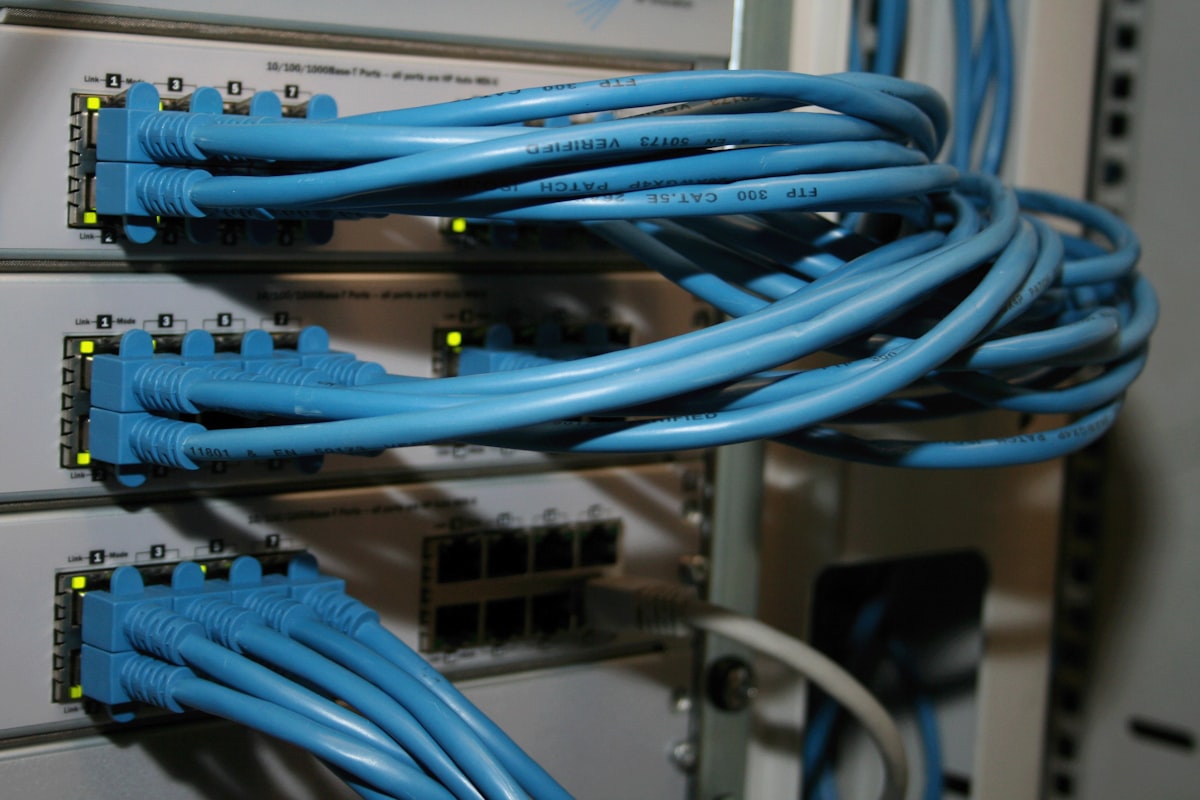
To put that GPU count in perspective: Meta’s much-publicized 2024 GPU cluster for AI research topped out around 350,000 H100s — but that was for internal use, built over years with owned hardware. Google’s deal here is a lease, not a purchase. The chip ownership structure and depreciation curves still sit with SpaceX/xAI. Google is essentially renting the firepower.
Typical cloud capex spending from a hyperscaler like Google runs in the $30–50 billion range annually across all infrastructure: servers, networking, real estate, cooling, and custom silicon. This single deal locks in nearly $11 billion per year just for GPU access. That’s roughly 20–35% of Google’s typical annual infrastructure spend, concentrated on one resource from one provider.
Compare that to traditional cloud leasing models. A reserved instance for an H100 on major cloud providers might run $2–4 per hour depending on contract length. At the conservative end, 110,000 GPUs at $2/hour for 730 hours/month would cost about $160 million per month. Google is paying nearly six times that rate. The premium reflects scarcity, urgency, and the strategic value of certainty in a supply-constrained market.
SpaceX’s xAI Data Center Play
SpaceX is, on the surface, a rocket company. But the infrastructure that launches Starlink satellites into orbit has quietly created something equally valuable: ground-based operational expertise at scale.
Running a constellation of thousands of satellites requires data centers, fiber backhaul, power negotiation, cooling systems, and real estate acquisition in remote locations with cheap electricity. Those same competencies translate directly to AI data center operations. SpaceX knows how to build fast, operate at the edge, and squeeze efficiencies out of infrastructure that traditional tech companies would over-engineer.
Colossus and Beyond
xAI’s Colossus cluster in Memphis, Tennessee, became operational in mid-2024 and quickly grew into one of the largest supercomputing sites in North America. The facility was designed with expansion in mind — and expansion has happened aggressively. The 110,000 GPUs in this Google deal likely represent a significant portion of Colossus’s total capacity, or capacity from a yet-unannounced second site.
What’s notable is that xAI didn’t build this infrastructure for Google. xAI built it for its own model training — Grok iterations, image and video models, and multimodal systems. The Google deal represents monetizing excess or planned capacity rather than serving as a pure colocation provider. That’s a crucial distinction: SpaceX/xAI isn’t becoming a cloud vendor. It’s becoming a strategic landlord to companies that need what it has.
Revenue Diversification Before IPO
SpaceX has been privately held since its founding in 2002. For years, investors have circled the company, waiting for liquidity. The long-anticipated SpaceX IPO has become tech finance’s “will they or won’t they” saga. This deal changes the calculus.
Recurring, contractual revenue from a creditworthy counterparty like Google — even if the deal sits on xAI’s books rather than SpaceX’s directly — strengthens the consolidated financial narrative ahead of a public offering. It proves that SpaceX’s infrastructure bets aren’t just cost centers for rocket launches and satellite broadband. They’re revenue-generating platforms.
The IPO Connection
The deal’s timing is impossible to ignore. October 2026 falls right in the window where Wall Street has been positioning for a SpaceX public listing. The 32-month term conveniently extends through mid-2029, giving SpaceX a multi-year runway of contracted revenue to point to in S-1 filings and investor roadshows.
But here’s where it gets complicated: Is this an xAI story or a SpaceX story?
xAI is a separate legal entity from SpaceX, though Elon Musk chairs both and operational overlaps are well-documented. The GPU infrastructure likely sits on xAI’s balance sheet and within its corporate structure. Google is contracting with whichever entity holds the assets — and the precise legal structure hasn’t been disclosed.
For IPO purposes, if SpaceX can demonstrate that its infrastructure investments (likely partially funded by SpaceX capital) generate returns through xAI revenue flows, the valuation multiplier on SpaceX’s non-launch business segments increases dramatically. Investors love recurring revenue. They love infrastructure moats. And they love a growth story that doesn’t depend entirely on Starship flight cadence.
On the flip side, if the deal is purely xAI’s and SpaceX’s involvement is limited to infrastructure support, the IPO benefits are more narrative than financial. Either way, the optics are unambiguously positive: SpaceX’s ecosystem now produces billion-dollar quarterly contracts with Alphabet. That’s a compelling bullet point in any prospectus.
What the SpaceX xAI GPU Deal Means for the GPU Market
The GPU shortage of 2023–2025 never really ended. It evolved. Supply chains normalized somewhat for mid-range gaming and enterprise cards, but data-center-grade AI accelerators — Nvidia H100s, H200s, and the newer B200s — remain allocated months in advance to a small club of buyers who order by the tens of thousands.
Deepening Scarcity or Stimulating Supply?
Google’s deal removes 110,000 high-end GPUs from the spot and secondary markets for nearly three years. For startups, researchers, and even mid-tier AI companies, this is bad news. The pool of available capacity just shrank meaningfully.
However, deals of this magnitude also send demand signals back to Nvidia and its foundry partners. If customers are willing to pay 5–6x normal lease rates for guaranteed supply, the economics of expanding fabrication capacity — or accelerating next-generation chip ramps — become more compelling. For context on broader chip investment trends, see our analysis of Samsung’s $73 billion AI chip strategy. TSMC and Samsung’s advanced packaging facilities may see additional investment based partly on contract visibility like this.
The counterpoint: chip fabrication cycles run 2–3 years from planning to volume production. Even if Nvidia greenlights more wafer starts tomorrow, those chips won’t arrive in time to relieve the 2026–2027 crunch. Short term, scarcity deepens. Medium term, the premium pricing justifies expanded supply.
Pricing Dynamics
Nvidia’s official pricing for H100s hovers around $25,000–$30,000 per unit in volume. On the secondary market, prices have spiked above $40,000 during shortage periods. If Google is effectively paying a rate that implies ~$50,000+ per GPU equivalent over the lease term, Nvidia has fresh leverage in its own negotiations. When a buyer of Google’s scale pays a premium, list prices for everyone else have room to rise.
The Startup Squeeze
The most concerning implication is for AI startups and academic labs without multi-billion-dollar infrastructure budgets. Compute access was already stratifying the AI field into haves and have-nots. This deal widens the gap. For teams seeking cost-efficient alternatives, our review of DeepSeek Reasonix explores how open-source terminal agents can slash daily AI coding costs from $60 to $1.38. Companies without reserved capacity face longer wait times, higher spot prices, or forced migration to less capable hardware — all of which slow iteration cycles and reduce competitive viability.
Some observers are calling for regulatory or policy intervention to ensure market access: public compute grants, antitrust scrutiny of exclusive deals, or incentives for cloud providers to reserve capacity for smaller users. Whether any of that materializes before 2027 remains an open question.
Competitive Landscape: AWS, Azure, and OpenAI
Deals this large don’t happen in a vacuum. They send shockwaves through competitor strategy sessions within hours of announcement.
Microsoft’s Likely Response
Microsoft’s Azure holds the closest comparable position through its OpenAI partnership, but that relationship is equity-based and compute-sharing, not a clean lease like Google’s SpaceX deal. Microsoft may feel pressure to secure similar guaranteed capacity from alternative sources — potentially deepening its own infrastructure partnerships or accelerating custom silicon (Maia and Cobalt chips) to reduce Nvidia dependence.
Microsoft could also explore defensive partnerships with other capacity-rich players: CoreWeave, Lambda Labs, or international operators with underutilized clusters. The risk is that by the time such deals are negotiated, the best capacity is already spoken for.
Amazon’s Position
Amazon Web Services has historically played the long game, building capacity organically and relying on its scale economics to outlast competitors. But organic builds are slow. AWS’s Trainium2 chips show promise but haven’t displaced Nvidia in customer demand. If AWS enterprise customers start demanding Nvidia-native capacity that AWS can’t guarantee, Amazon may face workload attrition to Google Cloud — precisely the scenario this deal enables.
OpenAI and Oracle
OpenAI’s compute backbone has historically relied on Microsoft Azure, with recent diversification into Oracle Cloud Infrastructure (OCI) for additional capacity. The Google–SpaceX deal raises an uncomfortable question: if Google can buy its way out of a capacity bottleneck, why can’t OpenAI do the same?
The answer may be that OpenAI already is — quietly. Or it may be that OpenAI’s cash position, despite its valuation, doesn’t support $29 billion in forward infrastructure leases while simultaneously funding model development, talent acquisition, and global expansion. Microsoft’s balance sheet is deep, but its willingness to fund OpenAI’s compute appetites indefinitely isn’t assured.
Alliance Structures
What we’re witnessing is the emergence of compute alliances: vertical partnerships between model builders, infrastructure owners, and capital providers that lock in capacity across multi-year horizons. It’s less cloud computing than coalition computing. The winners won’t just be the companies with the best models, but the ones who secured the physical silicon to train them.
Google just bought a seat at the head of that table. Whether the others can match it — or find an alternative path — will determine the competitive shape of AI through the decade’s end.
Risks and Open Questions
No deal this unprecedented comes without risks. Several loom large.
Regulatory and Political Scrutiny
Google contracting with an Elon Musk-linked entity injects politics into antitrust math. Musk’s public feuds with Google leadership, his ownership of X (formerly Twitter), and his role in the Trump administration’s Department of Government Efficiency have made him a polarizing figure in tech policy circles. If regulators wanted a reason to examine whether this deal creates market concentration or anticompetitive barriers, the narrative practically writes itself.
More substantively: does a single entity controlling this much GPU capacity — even as a lessor — raise competition concerns? U.S. and E.U. authorities have been increasingly aggressive on tech market structure. This deal may draw formal inquiry.
Execution Risk
SpaceX builds rockets well. Data centers are a different discipline. While the operational competencies overlap, running 110,000 GPUs at high utilization for 32 consecutive months requires uptime disciplines — power stability, cooling redundancy, network fabric reliability — that differ materially from satellite ground stations. Any significant outage doesn’t just cost Google money; it delays model training timelines that have downstream product implications.
xAI’s track record is short. Colossus has performed well, but not flawlessly. Scaling from one success to guaranteed multi-year delivery is a leap.
Demand Curve Uncertainty
Here’s the existential risk: what if AI training doesn’t keep scaling the way everyone assumes?
Efficiency improvements — algorithmic breakthroughs, distillation techniques, smaller models achieving parity with larger predecessors — could reduce the brute-force compute needs that justify this deal. If Google’s own research teams make a breakthrough that cuts training costs by 50%, the remaining ~$20 billion on this contract becomes a very expensive insurance policy.
Historically, AI has always found ways to consume more compute, not less. But “historically” is not a guarantee. Betting $29 billion on continuation of the scaling laws is, by any measure, a high-stakes wager.
The Concentration Problem
The final open question is structural: should one company control access to this much capacity? Even as a lessor, xAI/SpaceX now sits at a chokepoint in the AI economy. If Grok’s competitive position improves, does prioritized access to “its” GPUs follow? If geopolitical tensions affect chip supply, does this contracted capacity become a national security consideration?
These aren’t abstract concerns. They’re the kinds of questions that boardrooms, regulators, and geopolitical strategists are already asking. The answers will shape whether this deal is remembered as visionary infrastructure planning — or as the moment the AI industry centralized itself around a single chokepoint it couldn’t escape.
The Google–SpaceX xAI compute deal isn’t just a business transaction. It’s a declaration — that in 2026, compute capacity is sovereign power, and even the mightiest tech empires must pay tribute to those who hold the silicon. For Google, it’s a $29 billion hedge against falling behind. For SpaceX, it’s a revenue stream that reframes the company from rocket launcher to infrastructure platform. For everyone else, it’s a warning: the window for securing your place in the AI future is closing, and the price of admission just went up.
References and further reading
- SpaceX
- xAI
- Alphabet
- Nvidia
- Google Cloud TPUs
- Nvidia CUDA
- Gemini
- Microsoft
- Microsoft Azure
- Amazon
- Amazon Web Services (AWS)
- Anthropic
- OpenAI
- Oracle Cloud Infrastructure
- CoreWeave
- Lambda Labs
- TSMC
- Samsung
- Starlink
- X (formerly Twitter)
- HBM Reshaping Semiconductor Economics — internal analysis
- Anthropic’s $1.25B Monthly Compute Deal — internal analysis
- DeepSeek Reasonix Cost-Efficient AI Coding — internal review
- Samsung’s $73B AI Chip Strategy — internal analysis
Please let us know if you enjoyed this blog post. Share it with others to spread the knowledge! If you believe any images in this post infringe your copyright, please contact us promptly so we can remove them.