Right to Repair Tractors: The “No-Tech” Movement Rejecting Software-Defined Farm Equipment
When you picture a farm, you probably imagine open fields, weathered barns, and tractors chugging along at sunrise. You probably don’t picture a Linux server farm, a cloud dashboard, or a software update that bricked your combine harvester. But that’s modern agriculture. The average new tractor is now a data center on wheels—embedded computers, telemetry modules, and subscription-locked features that require dealer authorization to access. It’s no surprise that the right to repair tractors movement is gaining explosive momentum.
Enter an Alberta-based no tech tractor startup with a deliberately contrarian pitch: tractors with no software. No cloud. No DRM. No subscription tiers. Just steel, hydraulics, diesel, and the radical idea that the person who bought the machine should be allowed to fix it.
The response has been explosive. The story rocketed to the top of Hacker News—one of the week’s highest-scoring posts at nearly 2,000 points—and tapped into a surprisingly broad coalition of support: farmers, mechanics, open-source hardware advocates, privacy activists, and yes, even software engineers who find themselves cheering for less technology.

The $50,000 Software Problem
Modern farm equipment has become breathtakingly complex, and not always in ways that help the person operating it. A John Deere 8R series tractor can retail for $500,000 or more, and beneath the familiar green paint sits a network of proprietary electronic control units (ECUs), GPS-guided auto-steering modules, and remote diagnostics systems. The hardware is impressive. The ownership experience, for many, is not.

The core issue is software lock-in. Virtually every major manufacturer now embeds digital rights management (DRM) into its engines and hydraulics. Want to replace a sensor? The new part may need to be “authorized” by the manufacturer’s cloud service before the tractor will recognize it. Want to diagnose an error code? You’ll need dealer-exclusive software—often protected under trade-secret claims and the Digital Millennium Copyright Act. Want to rent a feature like precision planting or auto-steer? That’s increasingly sold as a subscription.
Farmers have been pushing back for years. The right-to-repair movement in agriculture gained mainstream attention in the late 2010s, when John Deere faced widespread criticism—and multiple lawsuits—for asserting that farmers merely “license” the software running on their equipment rather than owning it outright. The company argued that altering or repairing tractor software constituted copyright infringement. Farmers, whose livelihoods depend on uptime during narrow planting and harvest windows, argued that their tractors shouldn’t need a dealer’s permission to function.
For more background, see our history of John Deere repair alternatives.
The economic frustration is just as sharp as the philosophical one. A single breakdown during planting season can cost a farm tens of thousands of dollars in lost yield. Waiting days for an authorized technician to arrive with the right software key is not an operational inconvenience; it’s an existential risk.
How the Alberta Startup Built a “Dumb” Tractor
Somewhere in this mess of locked firmware and cloud dependency, a small team in Alberta saw a market opportunity that sounds almost absurdly simple: build a tractor that doesn’t do any of that.
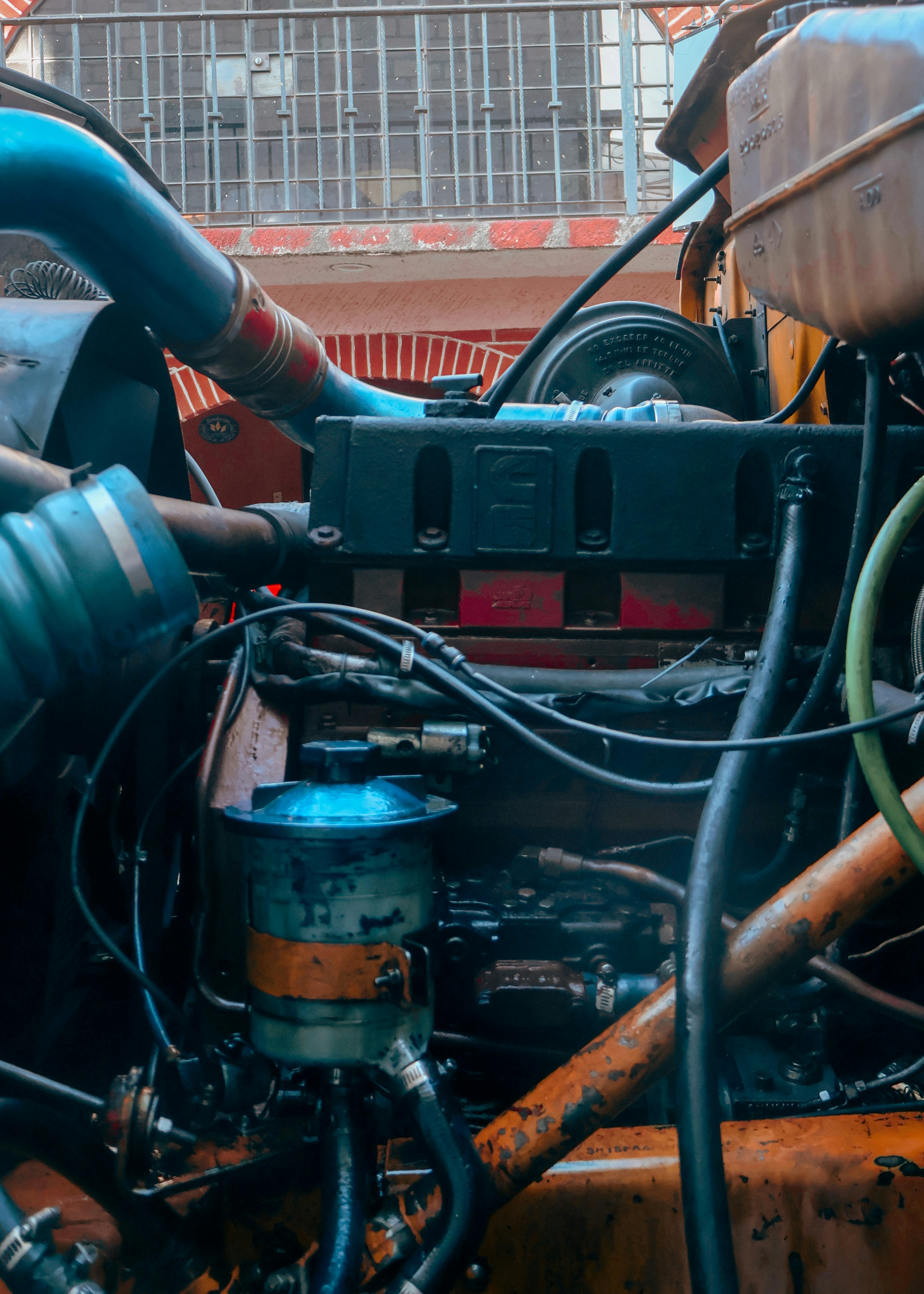
Their product—let’s call it what it is, a deliberately low-tech tractor—strips away the layers of proprietary electronics that have become standard in the industry. There’s no cellular modem phoning home to a manufacturer dashboard. No GPS module with a monthly subscription. No encrypted ECU handshake preventing third-party repairs. What remains is a straightforward diesel engine, conventional hydraulic systems, and mechanical linkages that any competent farm mechanic can service with standard tools.
This isn’t nostalgia masquerading as engineering. The startup isn’t building a museum piece. It’s making targeted, intentional design choices about where software adds value and where it becomes a liability. By removing proprietary telemetry and cloud connectivity, they’ve eliminated entire categories of failure modes: remote kill switches, bricked firmware updates, geofencing disputes, and data privacy concerns. By using standardized diagnostic interfaces—think OBD-II philosophy applied to hydraulics—they’ve made owner repair not just possible, but expected.
This approach has also attracted interest from advocates of open source agriculture equipment, who see standardized diagnostics as a step toward transparent component ecosystems and interoperable tools.
The manufacturing implications are worth noting. Without the need to integrate proprietary computer systems from tier-one suppliers, the bill of materials shrinks dramatically. The tractors reportedly sell for roughly half the price of comparable mainstream alternatives. In an industry where capital expenditure on equipment is one of the largest barriers to entry for smaller operators, that’s not a minor discount—it’s a structural market shift.
Of course, there are trade-offs. You won’t get AI-powered weed detection or real-time soil analysis from a stripped-down cab. But for many farmers, those features are either unnecessary or already handled by dedicated implements that attach to the tractor rather than being baked into its core systems. The startup’s wager is that the market includes a large constituency of buyers who want a power platform, not a vertically integrated computing ecosystem.
Why This Resonates with a Tech-Savvy Audience
If you’re wondering why software engineers and Hacker News readers are enthusiastically upvoting a story about less software, you’re asking the right question. The reaction reveals an important cultural pivot.

For decades, the technology industry has operated on an implicit assumption: more software is better. Smarter devices, connected ecosystems, AI-enhanced features, and seamless cloud integration have been the default direction of progress. But a growing subset of technically sophisticated consumers—and builders—are beginning to treat software as a liability rather than an asset when it functions as a control mechanism rather than a tool.
This isn’t anti-technology. It’s pro-sovereignty. The Hacker News crowd understands exactly what DRM on a tractor’s engine means because many of them build similar systems. They know how subscription models are architected. They understand telemetry pipelines, cloud authentication flows, and feature-flag paywalls. And when they look at a half-million-dollar tractor that won’t start because a certificate expired, they recognize a system designed to extract revenue from its owner rather than serve them.
The appeal of the “no-tech” tractor is similar to the appeal of open-source software, programmable hardware, and self-hosted infrastructure. It’s about retaining agency. A developer who runs their own server rather than relying on a SaaS platform is making the same fundamental choice as a farmer who buys a tractor without remote management: they want the root password to their own tools.
There’s also a growing disillusionment with the “software-defined everything” era. When your thermostat requires an account, your lightbulbs demand cloud connectivity, and your tractor reports your field boundaries to a corporate data lake, the overhead of ownership starts to outweigh the convenience. The Alberta startup’s product is a physical manifestation of a sentiment increasingly common in tech circles: sometimes the right answer is an if statement instead of a microservice, and sometimes it’s a mechanical linkage instead of a servomotor with encrypted firmware.
The Economics of Unlocked Hardware
Price is the headline, but the real economic story is about total cost of ownership. A tractor isn’t a smartphone; you don’t replace it every three years. It’s a decades-long capital asset, and its lifetime economics are heavily influenced by maintenance, repair autonomy, and downtime costs.

Industry estimates vary, but repair and maintenance can account for 15–25% of a tractor’s total cost of ownership over its lifetime. When those repairs are locked behind authorized service networks, parts monopolies, and software authorization fees, that figure climbs—and the farmer’s cash flow becomes hostage to the manufacturer’s pricing power.
By contrast, a hardware platform built on open standards creates competitive pressure at every layer of the value chain. Third-party parts manufacturers can enter the market. Independent mechanics can provide service. Owners can stock common components and perform preventive maintenance without scheduling dealer visits. The result is lower costs, shorter repair cycles, and significantly reduced downtime risk.
There’s also a secondary market consideration. Proprietary software lock-in tends to depress resale value because the buyer inherits the same dependency chain. A platform-agnostic tractor, by contrast, retains value more linearly because its utility isn’t contingent on a vendor’s continued support or subscription pricing.
From the manufacturer’s perspective, the business model inversion is fascinating. Most equipment companies today follow the printer-ink playbook: subsidize the hardware margin and capture recurring revenue from software, services, and proprietary consumables. The Alberta startup is doing the opposite—charging upfront for a fully capable machine and extracting no ongoing software rent. It’s less a SaaS play and more a durable goods play, harkening back to an older commercial logic where the transaction ended at the point of sale rather than began an indefinite extraction cycle.
Try our farm equipment total cost of ownership calculator to compare models.
What’s Next for Right to Repair Tractors and the Broader Ecosystem
The tractor story lands at a moment when legislation supporting right to repair tractors is gaining real traction. In the United States, multiple states have enacted laws requiring manufacturers to provide repair documentation, tools, and parts to consumers and independent shops. California, Minnesota, and New York have passed broad right-to-repair statutes, and agricultural equipment has been a specific focus due to the unique economic pressures facing farmers.
Tractor right to repair 2026 is no longer theoretical. At the federal level, the Federal Trade Commission has signaled increasing scrutiny of repair restrictions under antitrust and consumer protection frameworks. The Biden administration directed the FTC to draft rules limiting manufacturer’s ability to block independent repair, though the pace of regulatory change remains uneven.
You can also follow our right to repair legislation tracker for farm equipment.

In Europe, the trend is stronger. The European Union has adopted right-to-repair requirements for products ranging from smartphones to washing machines, and the regulatory trajectory is clearly toward mandating repairability as a design standard. Agricultural equipment is likely to face similar requirements under forthcoming ecodesign regulations.
These legislative shifts create tailwinds for startups like the Alberta tractor company, but they also put pressure on incumbents to adapt. John Deere, Case IH, and other major manufacturers have begun offering some concessions—expanded diagnostic tools, subscription opt-outs, limited owner-accessible repair capabilities. Whether these represent genuine strategic shifts or tactical compliance moves designed to forestall stricter regulation remains to be seen.
If you are interested in the broader ecosystem, read our guide to open source agriculture equipment.
The broader implication extends well beyond agriculture. Medical devices, automotive electronics, home appliances, industrial machinery, and even professional audio equipment all suffer from the same pattern of software lock-in and repair restriction. A successful “no-tech” tractor isn’t just a product; it’s a proof of concept that hardware can be sold as hardware, that consumers will pay for simplicity and sovereignty, and that a business can be built on trusting the owner rather than managing them.
If that model proves durable at scale, we may see the emergence of a deliberate “unlocked” tier across multiple categories of industrial and consumer equipment: products marketed explicitly on the absence of proprietary software, cloud dependency, and subscription requirements. In a world drowning in smart devices, dumb might just be the smartest feature of all.
Please let us know if you enjoyed this blog post. Share it with others to spread the knowledge! If you believe any images in this post infringe your copyright, please contact us promptly so we can remove them.