Yesterday, the Cerebras IPO walked onto the Nasdaq and walked off with a 108% first-day gain. A company that builds chips the size of dinner plates — Cerebras Systems, the Sunnyvale startup behind the world’s largest AI processor — priced its public debut at $5.5 billion and watched traders bid it up to roughly $11.4 billion by market close. That’s not a pop. That’s a detonation.
For context, this is the largest and most explosive tech IPO of 2026 so far. And unlike the social-media or SaaS debuts that typically grab Wall Street headlines, Cerebras isn’t selling ads or subscriptions. It’s selling an explicit bet against the most valuable company on Earth: NVIDIA.
Here’s why that bet just became impossible to ignore.

The Numbers Behind the Cerebras IPO That Stunned Wall Street
Let’s start with the raw figures, because they tell a story even the cynics can’t dismiss.
The Cerebras IPO priced its shares at $29 per share, raising approximately $750 million in fresh capital. By the closing bell, those shares were changing hands north of $60. The 108% first-day surge places Cerebras in rarified air — comparable to the Reddit IPO’s 48% pop in March 2024, and well ahead of ARM’s modest 25% debut in September 2023. In fact, the Cerebras IPO outperformed every major U.S. tech IPO of the past three years on day one.
Volume was equally staggering. Over 82 million shares traded hands, nearly 4x the float, suggesting institutions weren’t just nibbling — they were loading up. Analysts at Bernstein and Goldman Sachs both noted that the order book was “multiple times oversubscribed,” with sovereign wealth funds and tech-focused hedge funds fighting for allocation.
Why the frenzy? Because Cerebras isn’t a speculative AI play with no revenue. The company reported $193.5 million in revenue for fiscal 2025, up 342% year-over-year. Its gross margins are thin — 14% — but the trajectory is undeniable. Buyers aren’t betting on hope; they’re betting on scarcity. In a market where NVIDIA GPUs are back-ordered for months and cloud providers are desperate for training capacity, Cerebras represents a functioning alternative with a balance sheet.
What Cerebras Actually Builds (And Why It Matters)
To understand the Cerebras IPO, you need to understand the chip. And the chip is unlike anything else in semiconductors.
NVIDIA’s H100 — the current gold standard for AI training — is a powerful GPU, but it’s still a single die on a single package. If you want more compute, you buy more GPUs and link them together with InfiniBand or NVLink. It’s modular. It’s elegant. It’s also where the bottleneck lives: moving data between chips is slow, expensive, and power-hungry.
Cerebras threw out the modular playbook and asked a heretical question: what if the chip was the cluster?
Their answer is the Wafer Scale Engine, or WSE. The latest iteration, the WSE-3, is a single silicon wafer that houses 4 trillion transistors, 900,000 AI-optimized cores, and 44 GB of on-chip SRAM. It measures 215mm by 215mm — roughly the size of a small tablet — and is manufactured by TSMC on a 5nm process.
For comparison, an NVIDIA H100 has 80 billion transistors and needs eight GPUs (a DGX baseboard) to even begin competing on raw throughput. A single WSE-3 delivers roughly 125 petaflops of AI compute. To match that with H100s, you’d need a rack of servers, miles of interconnect cabling, and a data center power bill that would make a small city blush.
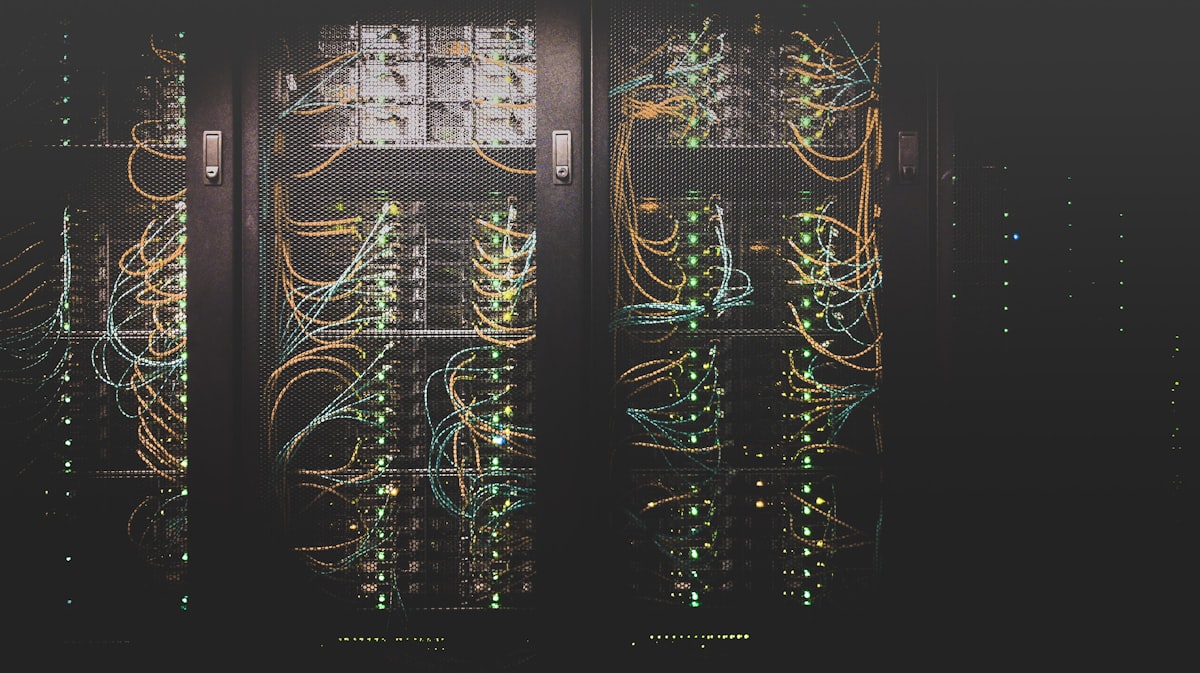
The architecture isn’t just about bragging rights. Because all 900,000 cores live on the same piece of silicon, they communicate at wafer-level speeds — orders of magnitude faster than chip-to-chip links. For large language model training, where the hardest problem isn’t matrix multiplication but moving activations and gradients between layers, that unity matters. Cerebras can train models with trillions of parameters without the complex parallelism strategies that slow down GPU clusters — a scale where even compact architectures like Alibaba’s Qwen3.6-27B are merely the beginning.
There’s a cost, of course. The WSE-3 is a bespoke, low-yield device. TSMC doesn’t love building single dies this large because defect rates rise exponentially with area. Cerebras has had to develop clever redundancy and routing techniques to route around bad cores, essentially treating the wafer like a fault-tolerant mesh rather than a monolithic processor. It’s bleeding-edge engineering, and it’s why no other company has commercially shipped a wafer-scale product.
Why Now? The Market Timing Behind the IPO
The Cerebras IPO didn’t happen in a vacuum. It happened because the window is open, and it may not stay that way.
Three forces converged to make May 2026 the perfect moment for the Cerebras IPO.
First: NVIDIA’s supply crunch has become a structural crisis.
Demand for H100s and the newer H200s still outstrips supply by a wide margin. Meta, Microsoft, and Google have collectively committed over $200 billion to AI infrastructure through 2027, and a huge slice of that is earmarked for NVIDIA silicon. Lead times for large GPU clusters stretch to six months or longer. Pricing power has shifted entirely to NVIDIA, which now enjoys gross margins north of 75% on its data center products.
That chokehold has created a buyers’ revolt. Cloud providers, AI labs, and sovereign nations are actively seeking alternatives not because NVIDIA’s chips are bad, but because relying on a single supplier for the world’s AI infrastructure is a strategic vulnerability. Cerebras, with a shipping product and real customers, walks into that anxiety with a solution.
Second: investor appetite for AI infrastructure plays is insatiable.
The market has bifurcated. Consumer AI apps — the ChatGPT wrappers and image generators — are facing skepticism about monetization and churn. But the picks-and-shovels layer underneath — the chip companies, the server manufacturers, the data center builders — is on fire. CoreWeave, another AI infrastructure startup, went public in March 2026 and trades at a 40% premium. Astera Labs, a connectivity chip company, has tripled since its 2024 debut.
Cerebras is the purest play in this cohort. It doesn’t rent cloud GPUs. It doesn’t make networking gear. It makes the actual engine. For investors who believe AI compute demand will grow 10x this decade, the Cerebras IPO offers a direct bet on the piston.
Third: the SpaceXAI merger fallout created a talent and narrative vacuum.
The surprise absorption of xAI into SpaceX’s broader aerospace and defense portfolio in early 2026 sent shockwaves through the AI hardware world. Musk’s Dojo supercomputer project — seen as a potential NVIDIA challenger — was deprioritized, and key chip architects scattered to rivals. Cerebras hired at least three senior Dojo engineers in the months following the merger, and the narrative of “someone needs to challenge NVIDIA” lost its most colorful protagonist.
Into that vacuum stepped Cerebras, with a CEO (Andrew Feldman) who has spent a decade pitching wafer-scale as the inevitable next architecture. The Cerebras IPO wasn’t just a funding event. It was a coronation. Samsung’s $73 billion AI chip investment is another signal that the global race for AI silicon independence is accelerating beyond a single startup.
The Competitive Landscape
Let’s be honest: Cerebras is not about to dethrone NVIDIA tomorrow. The competitive dynamics are more nuanced than a zero-sum fight, and understanding where Cerebras wins — and where it still loses — is critical.
NVIDIA’s moat is deeper than silicon.
The CUDA ecosystem is the most underrated competitive advantage in technology. Fifteen years of accumulated libraries, frameworks, research code, and engineer familiarity means that switching from NVIDIA to anything else isn’t a hardware decision — it’s a retraining decision. Every PhD student learns PyTorch on CUDA. Every production model at OpenAI, Anthropic, and Google was optimized for NVIDIA tensor cores. That inertia is real, and it’s expensive to overcome.
Cerebras knows this. That’s why they’ve built a software abstraction layer — Cerebras Software Platform, or CSP — that can ingest standard PyTorch and TensorFlow models and compile them for the WSE-3. But “can run” is not the same as “runs well.” Early customer reports suggest that porting a model takes weeks rather than minutes, and some operations (particularly sparse attention and certain quantization schemes) are still better optimized on NVIDIA hardware.
AMD, Google, and Amazon are playing different games.
AMD’s MI300X is the most direct GPU competitor to the H100, and it’s gaining traction with cloud providers who want a second source. But AMD is still playing NVIDIA’s game — discrete GPUs, clusters, CUDA-like ROCm ecosystem — just with better pricing.
Google’s TPU v5p and Amazon’s Trainium2 are more interesting comparables to Cerebras because they’re also custom, non-GPU architectures built specifically for AI. Google’s TPUs power its internal Gemini models and are available through Google Cloud, but they’re not sold as standalone hardware. Amazon’s Trainium is similarly cloud-tethered. Neither is building a general-purpose AI chip for sale to third-party data centers.
Cerebras occupies a unique position: it’s an independent, vertically integrated AI hardware company that sells directly to enterprises, governments, and cloud providers. That independence is either its greatest asset or its fatal vulnerability, depending on whether the ecosystem catches up.
Where Cerebras wins: training throughput and memory bandwidth.
For massive-scale training — think trillion-parameter models, multi-day runs, dense transformer architectures — the WSE-3’s unified memory and core-to-core bandwidth creates a genuine efficiency advantage. Customers like GlaxoSmithKline (molecular modeling) and the Pittsburgh Supercomputing Center (scientific workloads) have reported 10x speedups on specific problem sets compared to GPU clusters of similar power draw.
Where it doesn’t: inference cost, edge deployment, and software maturity.
Inference — running a trained model to answer user queries — is a different workload than training. It favors smaller, cooler, cheaper chips deployed at the edge and in regional data centers. The WSE-3 is a powerhouse, but it’s not cheap, and it runs hot. A Cerebras system for inference is overkill in the same way a freight train is overkill for grocery delivery. NVIDIA’s L40S and the newer edge-focused chips from Qualcomm and MediaTek are better suited for this role. On the consumer side, Apple’s iPhone 17 Pro is already demonstrating that 400-billion-parameter models can run locally at the edge.
Risks and Red Flags for the Road Ahead
No IPO this explosive comes without asterisks. The Cerebras IPO has real risks, and smart investors — and buyers — should weigh them carefully.
Burn rate and path to profitability.
The $193.5 million revenue figure is impressive, but so is the company’s burn rate. Cerebras posted a net loss of $517 million in fiscal 2025, and its cash runway would have narrowed substantially without this IPO infusion. The company has stated that it expects to reach EBITDA breakeven by late 2027, but that depends on sustaining its 300%+ growth rate — a tall order as comparables get harder and competition intensifies.

Customer concentration is a quiet vulnerability.
Cerebras has publicly named a handful of large customers — GSK, the U.S. National Science Foundation, a few undisclosed “major cloud providers” — but its revenue is heavily concentrated. In its S-1 filing, the company disclosed that its top three customers accounted for over 60% of 2025 revenue. Losing even one would be a body blow. Diversifying the customer base is a priority, but selling wafer-scale systems is not a high-velocity sales motion. These are multi-million-dollar, multi-quarter engagements.
Software maturity is the real battleground.
Hardware without software is just expensive sand. Cerebras has made enormous strides with its compiler and runtime, but the ecosystem gap versus NVIDIA remains wide. There are no WSE-3 versions of the thousands of open-source CUDA kernels that researchers rely on. The company is investing heavily — roughly 35% of headcount is in software — but ecosystem gaps take years, not quarters, to close.
There’s also the yield risk. Building a single chip this large is inherently fragile. A dust particle in the wrong place can scrap a $2 million wafer. Cerebras has been remarkably opaque about its actual manufacturing yields, and any sustained yield collapse would crater margins that are already thin.
What This Means for the AI Hardware Market
The Cerebras IPO is more than a financial event. It’s a signal that the AI hardware market is diversifying whether NVIDIA likes it or not.
For the past five years, the industry has operated on an implicit assumption: NVIDIA builds the best chips, CUDA is the universal language, and anyone who wants to train AI models pays the toll. That assumption created a $3 trillion company. It also created a monoculture.
Monocultures are efficient until they’re not. The current supply crunch, the pricing power, the geopolitical concentration of TSMC manufacturing — these are all symptoms of a market with too few viable alternatives. Cerebras’ public-market validation doesn’t fix that overnight, but it injects capital, credibility, and competitive pressure into a space that desperately needs all three.
For enterprise buyers and cloud providers, the message is clear: multi-vendor AI infrastructure is no longer a nice-to-have. It’s a risk-management imperative. The organizations that have already piloted Cerebras, AMD, and custom silicon alongside NVIDIA are building operational resilience. The ones still all-in on a single supplier are one allocation email away from a crisis.
For startups and researchers, the Cerebras IPO is a vote of confidence in non-GPU architectures. The next wave of AI hardware startups — optical compute, neuromorphic chips, analog inference — will raise money more easily because Cerebras proved that Wall Street will back unconventional silicon if the metrics are there.
For investors, Cerebras is now the bellwether for AI infrastructure risk appetite. If the stock holds its gains through the next earnings cycle and demonstrates that revenue growth is sticky, expect a pipeline of AI chip and data center IPOs to follow. If it crumbles under lock-up expirations or a revenue miss, the window may slam shut for everyone else.
The broader implication is philosophical. For years, the AI hardware conversation was dominated by a single question: “How do we get more H100s?” The Cerebras IPO just forced the market to ask a different one: “What if the H100 isn’t the final form?”
Wafer-scale computing remains an audacious, unproven bet at commercial scale. But with the Cerebras IPO complete, that bet is now a publicly traded company with an $11 billion valuation, real customers, and a chip that genuinely does things no NVIDIA GPU can. The monopoly isn’t dead. But for the first time in a long time, it has company.
References and further reading
- Cerebras Systems — official company website and WSE-3 specifications
- NVIDIA — data center GPUs and CUDA ecosystem
- TSMC — semiconductor foundry and advanced process nodes
- PyTorch — open-source machine learning framework
- TensorFlow — Google machine learning platform
- GlaxoSmithKline (GSK) — pharmaceutical research and molecular modeling
- Samsung $73B AI chip investment — related analysis of AI silicon investments
- iPhone 17 Pro local LLM coverage — edge AI inference benchmarks
Please let us know if you enjoyed this blog post. Share it with others to spread the knowledge! If you believe any images in this post infringe your copyright, please contact us promptly so we can remove them.