What Is TSME and Why Should You Care?
Memory encryption sounds like something only government agencies and paranoid security researchers worry about. But here’s the thing: your Ryzen CPU has been doing it automatically, in the background, every single day—and you probably never noticed.
That invisible bodyguard is called Transparent Secure Memory Encryption, or TSME. It’s a hardware-level feature built into AMD’s Zen architecture that encrypts everything flowing to and from your RAM. Not your files on disk. Not your browser traffic. Your actual physical memory sticks. The ones an attacker could rip out of your PC while you’re grabbing coffee.
The recent news that AMD TSME was disabled on consumer Ryzen chips through a quiet firmware update means that protection has vanished for millions of users without warning.
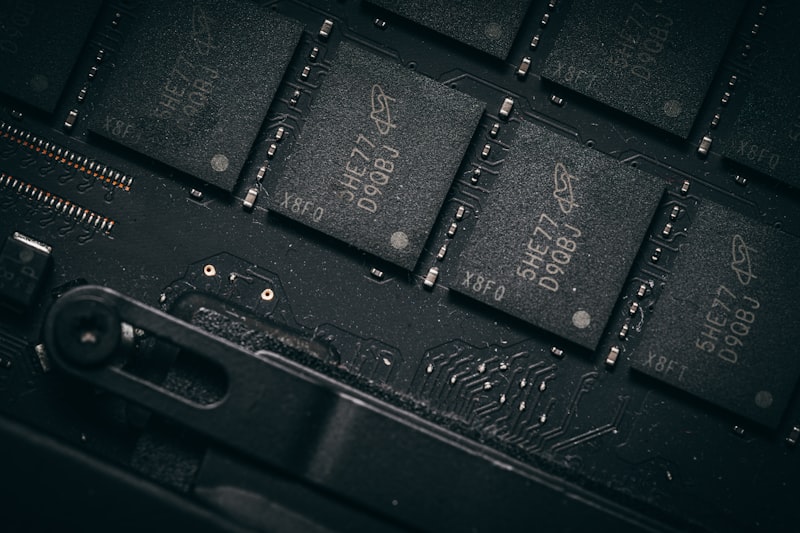
TSME works by generating an ephemeral encryption key inside the CPU’s memory controller. Every write to DRAM gets scrambled. Every read gets unscrambled. The key never leaves the chip. The process is completely transparent to the operating system, to your applications, and to you. You don’t install anything. You don’t toggle a setting. It just runs.
That “just runs” quality is exactly why its disappearance is so unsettling.
AMD also offers a more robust sibling feature called full Secure Memory Encryption (SME). SME requires explicit OS support and lets administrators encrypt specific memory regions or mark pages as encrypted. TSME, by contrast, is the always-on, consumer-friendly version. Think of SME as a vault you choose to use, and TSME as automatic home insurance you didn’t know you had—until the policy got canceled without a letter.
The protection TSME provides matters because RAM is surprisingly vulnerable. When your computer sleeps, hibernates, or even just sits idle, data lingers in those memory modules for seconds, sometimes minutes. Attackers with physical access can exploit this. They don’t need your password. They don’t need to hack your operating system. They just need a screwdriver and a $20 tool.
The Silent Removal: How AMD TSME Was Disabled on Consumer Ryzen
Sometime in the past several months, AMD began stripping TSME from consumer-grade Ryzen firmware. There was no press release. No advisory. No bolded warning in a changelog. One day the feature was there, baked into the silicon, handling encryption silently. The next day, for millions of users, it simply wasn’t.
The change appears to have arrived through standard BIOS and AGESA updates—the firmware patches motherboard vendors distribute routinely. Most users install these updates chasing stability improvements, memory compatibility fixes, or support for newer CPUs. Few ever dig into the cryptic patch notes. Even fewer probe memory-controller behavior before and after flashing.
Affected processors span multiple Ryzen generations on consumer desktop platforms. If you own a non-PRO Ryzen 5000, 7000, or 9000 series CPU, and you’ve applied a recent motherboard firmware update, your system is likely running without the memory encryption it shipped with. PRO-series chips, designed for business deployments, appear to retain TSME. EPYC server processors, which rely heavily on SME and TSME for multi-tenant isolation, are reportedly unaffected.
The segmentation is stark. Flash a consumer BIOS, and the memory controller initializes in plaintext mode. Flash a PRO BIOS with the same silicon, and encryption remains active. The difference is not architectural. It’s a firmware gate. AMD flipped a switch, and consumer motherboards stopped flipping it back.
This isn’t a bug. Bugs get errata documents. Bugs get CVEs. This looks like an intentional product decision communicated with the volume of a tree falling in an empty forest.
How the Community Caught AMD
The Firmware Diff That Started It All
The discovery did not come from a journalist, a leaked memo, or an AMD engineer growing a conscience. It came from hobbyists comparing binaries.
Firmware analysts in the hardware community routinely diff AGESA modules across releases, looking for memory-training tweaks, compatibility additions, and hidden features. In early June, several contributors noticed that a specific firmware path related to memory-controller initialization had been altered. The branch that previously forced TSME initialization on consumer parts now gated behind a PRO-only check. The commit message, if there ever was one, did not accompany the public release.
Once the binary trail surfaced, verification followed quickly. Researchers booted Linux with mem_encrypt=on and checked dmesg output. They examined memory-controller registers. They compared pre-update and post-update firmware behavior on identical hardware. The conclusion was consistent: TSME, once active by default, now failed to initialize on consumer Ryzen. The kind of low-level system verification this required is not unlike the forensic work behind the GhostLock Linux kernel container-escape disclosure, where researchers had to trace kernel behavior across more than a decade of releases.

Forum Threads and Reverse-Engineering Efforts
Within days, threads on Level1Techs, the AMD subreddit, and hardware-focused Discord servers ballooned with test results. Users confirmed the behavior across multiple motherboard vendors. ASRock, ASUS, Gigabyte, and MSI BIOSes all showed the same pattern, pointing to an upstream AGESA change rather than a single vendor’s misconfiguration.
Some community members went further, attempting BIOS modding to restore the old initialization path. The experiments partially succeeded on select boards, reinforcing the theory that the silicon is fully capable—AMD simply chose not to enable it.
Why AMD Issued No Advisory, Changelog, or Press Statement
The silence is, in some ways, more revealing than the change itself.
Security features that get removed quietly are rarely accidents. They’re business decisions someone judged too controversial to advertise. By omitting TSME from changelogs, AMD avoided the headline “AMD TSME Disabled on Consumer CPUs.” Instead, they got no headline at all—until the community forced one.
This pattern of silent feature deprecation isn’t unique to AMD. Hardware vendors have historically sunsetted capabilities without fanfare when those capabilities complicate support matrices, create certification headaches, or simply don’t drive purchasing decisions for the target demographic. But when the capability in question is a security boundary, silence crosses into a different ethical territory.
Who Is Actually Affected?
The short answer: a lot of people who don’t realize it.
Consumer desktop Ryzen users represent the largest group. If you built a gaming PC, a content-creation workstation, or a general-purpose desktop with a standard Ryzen 5, 7, or 9 processor, and you’ve kept your motherboard firmware current, your RAM is almost certainly running unencrypted now. You didn’t opt out. You weren’t asked. The feature simply left.
Small-business and home-lab builders get hit especially hard. These users often choose consumer Ryzen parts for cost reasons, assuming the underlying security architecture matches the PRO lineup minus enterprise management features. That assumption was reasonable until it wasn’t. A small design studio running Ryzen 9 workstations with fully encrypted disks may now have an unencrypted memory layer they never knew existed.
Who escapes this? PRO-series Ryzen owners, assuming their firmware retains the feature. EPYC users, whose memory encryption remains critical for cloud and virtualization workloads. And anyone still running pre-change firmware—though staying on old BIOS versions trades security for security, creating a patching dilemma no user should be forced into.
The Real Security Implications
Cold-Boot Attacks on Unencrypted RAM
The classic cold-boot attack is almost embarrassingly simple. An attacker with physical access forces a reboot, sprays the RAM sticks with canned air to cool them, then yanks them out and dumps their contents before the capacitors fully drain. In unencrypted memory, that dump contains encryption keys, passwords, session tokens, and other sensitive material. With TSME active, the dump is noise. Without it, the dump is treasure.
This attack isn’t theoretical. Researchers at Princeton demonstrated it against disk encryption systems over a decade ago. Modern DRAM retains data longer than most people assume, especially when chilled. The only robust defense is memory encryption, because once physical access is lost, everything else becomes a speed bump — the same reasoning behind full-disk encryption tools like BitLocker, whose own backdoor exploit we’ve covered separately.
DRAM Interposers and Physical Extraction
More sophisticated attackers don’t even need to remove the RAM. DRAM interposers—thin boards that slot between the memory module and the motherboard—can sniff bus traffic in real time. These tools are niche and expensive, but they exist, and they work best when the bus carries plaintext. TSME encrypts data before it hits the pins, rendering interposers far less useful. Remove TSME, and the bus becomes readable again.
Does This Matter for the Average User?
Honestly? For most people reading this in their living room, the practical risk is low. Your roommate is probably not chilling your RAM modules while you shower. The barista at your local coffee shop is almost certainly not wielding a DRAM interposer.
But security models aren’t built for average days. They’re built for worst-case days. The day your laptop gets stolen from a hotel room. The day a forensic team seizes your workstation. The day a malicious insider with hardware skills targets your machine. In those moments, memory encryption is the difference between “they got the hardware” and “they got everything.”
Moreover, “you probably won’t be attacked” is a terrible justification for silently removing a security boundary. If your car manufacturer quietly disabled the airbags on new models because most people don’t crash, you’d rightly be furious. Security features exist for the exceptions, not the averages.

Edge Cases: Stolen Laptops, Forensic Recovery, and Evil-Maid Scenarios
Laptop theft is the most realistic threat for everyday users. Full-disk encryption protects your data at rest, but when your laptop is powered on or sleeping, decryption keys live in RAM. A thief who knows what they’re doing can extract those keys from an unencrypted memory module before the system fully shuts down. TSME closes that window. Its absence reopens it.
Evil-maid attacks—where an attacker with temporary physical access compromises a device—similarly benefit from plaintext RAM. Interposers and bus attacks become viable attack paths that encryption would have neutralized.
AMD’s PRO-Only Pivot: Business Strategy or Security Regression?
Product segmentation is standard practice. Intel does it. NVIDIA does it. Every major silicon vendor creates artificial tiers to push buyers up the stack. But there’s a meaningful difference between disabling, say, ECC memory support or vPro remote management, and disabling a transparent security feature that was previously active.
The move aligns with AMD’s broader strategy of reserving robust security capabilities for PRO and EPYC lines. Full SME, Secure Encrypted Virtualization (SEV), and now apparently TSME are becoming premium badges. The logic from a spreadsheet perspective is clear: enterprises pay for security, consumers don’t know to ask for it.
Yet this specific cut feels different because TSME wasn’t a premium feature. It was a baseline, invisible, always-on protection. Consumers weren’t choosing to buy it. They already had it. AMD took it back, then said nothing, and that transforms the conversation from market segmentation into something closer to a silent security downgrade.
Intel’s consumer platforms, for reference, don’t offer an exact TSME equivalent in the first place, so direct comparison is limited. Apple’s M-series chips encrypt memory by default across all tiers. NVIDIA’s Grace platform — alongside newer NVIDIA silicon like the RTX Spark N1X superchip — includes memory encryption without segmentation. The industry direction is mixed, but the trend toward hardware-level memory protection is generally growing, not shrinking. AMD is swimming against that current, even as memory itself becomes a bigger line item in overall AI hardware costs.
Should firmware security downgrades be disclosed? The answer is self-evidently yes. Security advisories exist for vulnerabilities. A deliberate feature removal that expands the attack surface deserves at least as much transparency as a buffer overflow. The alternative—relying on binary diff hobbyists to discover that AMD TSME was disabled on consumer chips—is a broken model of vendor accountability.
What You Can Do About It
Check If Your System Is Affected
Linux users can verify TSME status quickly. Check your kernel boot messages for memory-encryption initialization lines:
1 | dmesg | grep -i "mem_encrypt\|sme\|tsme" |
If TSME is active, you’ll see confirmation that SME is enabled. If the output is empty or indicates SME is disabled, your memory is unencrypted.
On Windows, verification is harder because the OS doesn’t expose TSME status directly. Third-party tools or firmware-level debugging may be required. The most reliable proxy is checking your motherboard’s BIOS version and AGESA string against community-documented cutoff points where TSME disappeared.
Firmware Rollback Options and Caveats
If you’re on a post-change BIOS and your motherboard supports downgrades, rolling back to pre-removal firmware may restore TSME. The catch? You lose subsequent security patches, stability fixes, and hardware compatibility updates. That’s a dangerous trade, and nobody should have to make it.
Some vendors are beginning to issue statements about whether they will offer TSME-optional firmware branches or restore the feature. Monitor your motherboard manufacturer’s support forums for guidance specific to your board.
Mitigations for High-Risk Threat Models
If you cannot restore TSME and your threat model includes physical-access attacks, double down on compensating controls:
- Power down completely instead of sleeping or hibernating when leaving your device unattended. This reduces the window for cold-boot extraction.
- Use strong full-disk encryption with long, unique passphrases. Disk encryption doesn’t protect live memory, but it limits what an attacker gains if they can’t extract keys.
- Enable secure boot and firmware passwords where available. These don’t stop hardware attacks, but they raise the bar for less sophisticated threats.
- Consider a PRO-series processor for future builds if memory encryption is non-negotiable for your use case. The premium is real, but so is the protection.
Considerations for Future Purchases
TSME’s quiet removal should factor into buying decisions, not just for individuals but for organizations recommending hardware. If you’re speccing machines for remote workers, creatives handling sensitive client material, or anyone whose physical security cannot be guaranteed, the distinction between consumer and PRO Ryzen just became a lot more important.
Read motherboard BIOS changelogs skeptically. Ask vendors directly about memory encryption status. And treat “silicon-level security” marketing claims as something to verify, not trust.
Bottom Line
AMD’s decision to disable TSME on consumer Ryzen isn’t a product tweak. It’s a silent removal of a hardware security boundary that millions of users relied on without knowing it. The fact that the community—not AMD—discovered and documented the change speaks to a transparency failure as troubling as the technical one.
For the average gamer or home-office worker, the immediate practical risk is small. But security isn’t about managing averages. It’s about closing doors that attackers might walk through, and AMD just unlocked one without telling anyone where the key went.
If you own a consumer Ryzen CPU, verify your firmware status. Push your motherboard vendor for clarity. And demand better from hardware manufacturers who treat security features as quietly expendable. Silence is acceptable for marketing fluff. It is never acceptable for security regressions.
Your RAM deserved better than a stealth downgrade. So did you.
References and further reading
- AMD
- Lest We Remember: Cold Boot Attacks on Encryption Keys — Princeton University
- Level1Techs Forum
- Linux Kernel Archives
Please let us know if you enjoyed this blog post. Share it with others to spread the knowledge! If you believe any images in this post infringe your copyright, please contact us promptly so we can remove them.